461 Response Making an Impact on Lives of Quiet Heroes in Texas
“How you guys doin’?” the man inquired.
“We’re pretty tired and worn out,” one of the brushcutters responded honestly.
“Please don’t stop now,” said the man, his voice breaking, but edged in desperation. “Bring my baby girl home. She is out there, lost . . . .”
Heads turned, eyes averted, jaws set, and more than one hand went to cover suddenly moistened eyes. The volunteers, their hearts gripped by another’s unimaginable loss, continued their efforts with renewed energy and determination.
“This story and hundreds like it have been taking place over and over again,” says 461 (forty-six one) Response Chaplain Rudy Martinez, who notes over 100 people are still missing (as of Wednesday, July 16). “We’re here to minister to the first responders — law enforcement, EMS, search and rescue or recovery — but we’re also here to minister to the forgotten heroes, the volunteers who show up . . . who will be taking things that they see, hear, and smell home with them that they’ll never forget.”
461 RESPONSE
461 Response, which draws its name from Psalm 46:1, is an Assemblies of God Chaplaincy Ministries program, which is part of AG U.S. Missions (AGUSM), that is made up of chaplains, ministers, and laypeople from a network of AG churches and districts committed to helping reach communities during times of tragedy or disaster.
The focus of the ministry isn’t to duplicate what others do (such as Convoy of Hope, where food, water, tarps, and other emergency relief supplies are the immediate focus), but to minister to the vast emotional and spiritual trauma that cripples and ripples out during and following a crisis event.
“Disasters and tragedies can happen at anytime, anywhere,” says Martinez, 67, an endorsed AG chaplain who is currently leading the 461 Response effort in the Texas Hill Country and also pastors Polacca Assembly of God in northeast Arizona. “And in those times, we — the Church — need to be present for those who have suffered the trauma of incredible loss as well as to those who that loss touches.”
Chaplain Mike Reighard, endorsed by AGUSM Chaplaincy Ministries and director of 461 Response, explains that care for people in crisis situations, evolves with time and increasing stress — it’s also where the trained 461 Response chaplains become increasingly valuable.
“As the crisis continues, disappointment and depression set in, needs change, shock wears off, exhaustion becomes obvious, and emotional/spiritual confusion begin to emerge,” Reighard explains. “At each stage of need, different ministry opportunities present themselves. The Incident Commander (in this case, Ch. Martinez) coordinates the timing, team, and type of care needed.”
KERRVILLE AND BEYOND
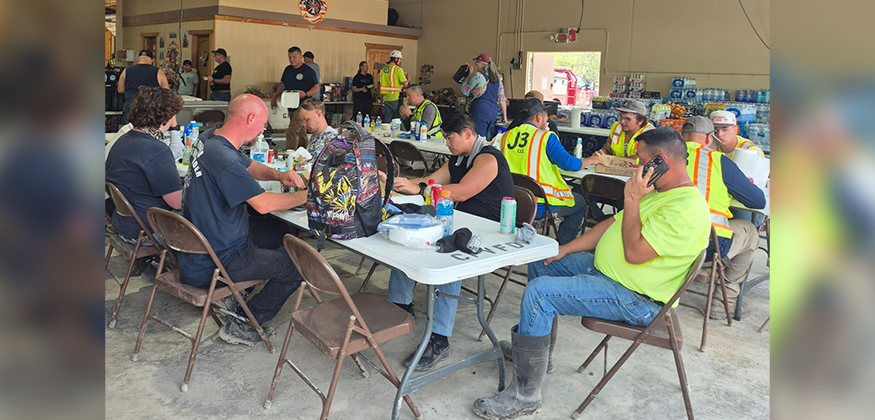
Martinez, who arrived on site on Tuesday, July 8, and having already connected with First Assembly of God in Kerrville, explains that chaplains have been coming and going throughout the week, doing the small things like keeping coolers filled with ice water and simply mixing in with the volunteers and first responders as they stop for water or something to eat, ready to listen to and prayerfully respond to their needs.
“As we’ve forged trust as chaplains through our ongoing presence and care, it’s not uncommon for a volunteer or professional to give a look toward or point a covert finger toward someone who is struggling — who needs to talk,” Martinez says.
Phil Jackson, who pastors First Assembly of God with his wife, Kim, has been assigned the duties of the interfaith coordinator for the area (coordinating as much as possible faith-based response efforts). He says that the local AG churches have been partnering with many ministries, including 461 Response.
“Convoy of Hope set up at Gateway Fellowship (AG) for distribution,” Jackson says, “and we are working with multiple organizations here at First, including Operation Blessing, Somebody Cares, Mercury One, and many others.”
However, with all the enormous time commitment it takes to coordinate and provide aid where needed, Jackson says he barely has time to sleep much less consider the impact of the trauma on his life or to counsel others.
“It’s a wonderful thing that the 461 Response chaplains are here,” Jackson says. “But in the long-term, people are going to need their help even more.”
Deborah Prihoda, an executive presbyter for the South Texas District, has been a disaster response chaplain since 2004. She joined up with Martinez on Friday evening.
“Even in my first days here, we’ve had a lot of people thanking us for being here,” Prihoda says. “The command staff said we were invaluable.”
As the chaplains make themselves available and useful throughout the long days, and don’t leave for the evening until the command staff locks things down, it’s not difficult to understand the command staff’s appreciation.
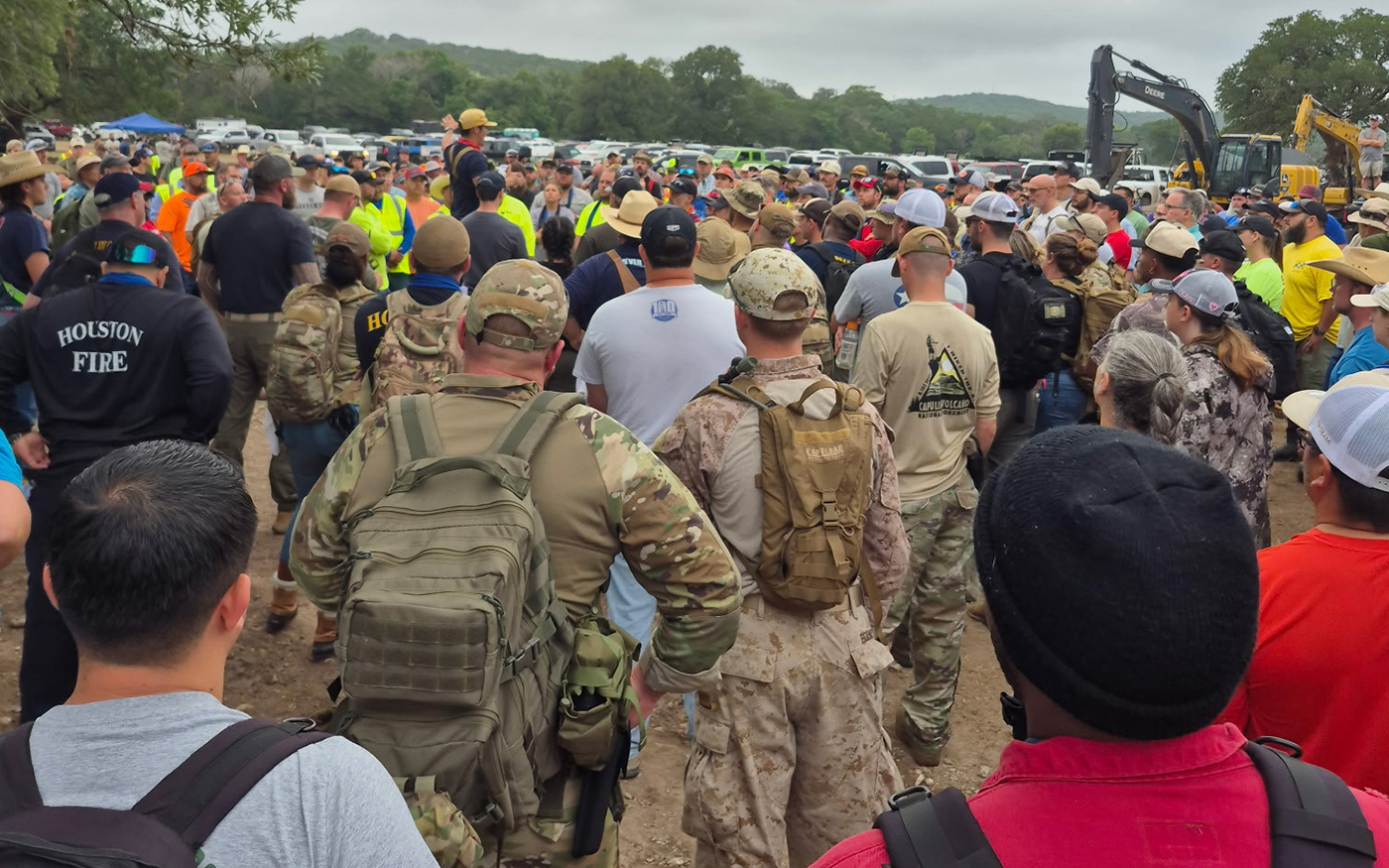
“I drove in from Rosenberg (Texas),” Prihoda says. “The response to this tragedy has been massive — thousands of people working, searching — there wasn’t a hotel room available anywhere . . . people are sleeping in their cars, just so they can help . . . in our area alone, we probably had 400 volunteers working on Saturday.”
Martinez explains how some of the first things people notice when they arrive on site to help is the sense of resolve coupled with emotional pain and an urgency that is difficult to describe.
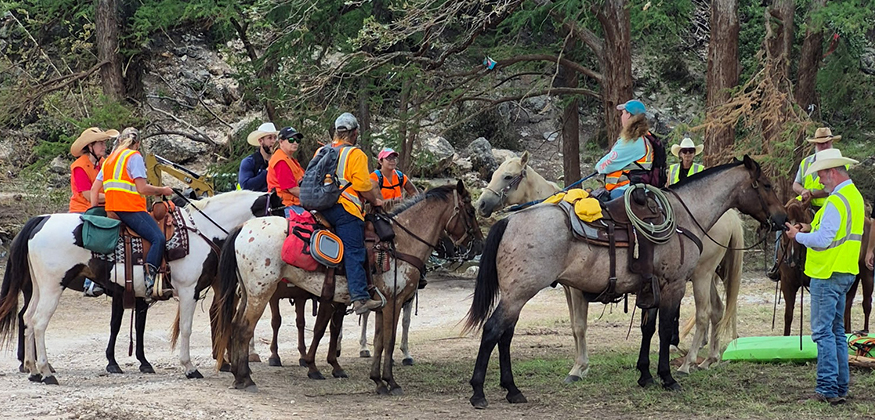
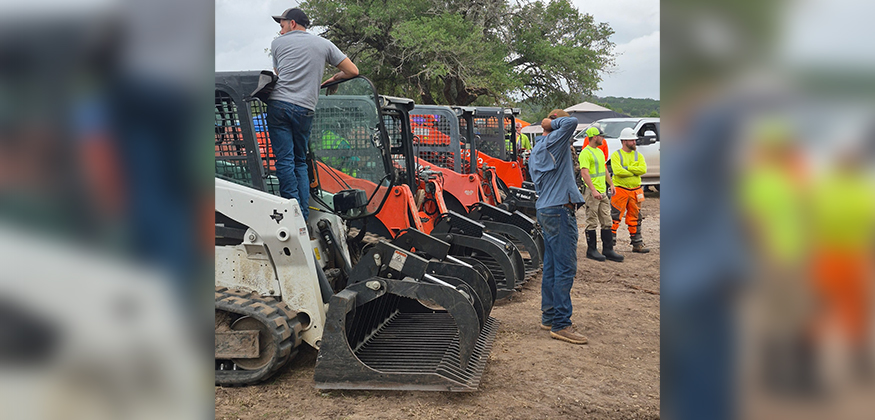
“There are hundreds (overall thousands) of people gathered at the sites with one purpose,” he says. “There is no laughing, no joking — the camps are very quiet. These people are here to hopefully bring closure for families who still have someone missing.”
THE REAL HITS HOME
Martinez explains that many of the volunteers coming to help simply don’t realize the types of things they may encounter — or the impact it will have — during their efforts to bring closure for families. He notes that searchers cannot pick up anything they find and not somehow relate it to themselves or their families.
“I met with a group of three younger fellows, I’d say all between the ages of 18 and 25, who had come to help,” Martinez says. “You see, everything found, must be turned in to the command center — these three had found body parts. They didn’t know how to react to or process that . . . I was able to talk with them, help them talk about their feelings, then we prayed and cried together, and afterwards they shared how they felt a whole lot better.”
In another instance, one of Martinez’s chaplains noticed a man coming up from the river toward the command center. In his hands, he held a little yellow dress.
“My chaplain, who happened to be walking that direction, asked the man how he was doing,” Martinez says. “The man responded by holding up the dress and saying, ‘My daughter can fit in this dress.’ And then he lost it. The chaplain was there to listen to him, pray with him, and help him get through a tough time.”
Prihoda says that as she made her way to the command center site, she saw huge trees uprooted and things such as kayaks and sleeping bags in treetops, all now silent testaments to the ferocity of the terror that enveloped so many just days before.
“Until you start hearing their (searchers’) stories, you really don’t understand,” Prihoda says. “Even in their intense pain, it’s their heart of wanting to bring closure to families, to bring those families’ loved ones home . . . there’s an amazing comradery and unity of spirit that you feel. They’re from all walks of life, bringing a bond and community that you can feel when you walk onto the property.”
ONGOING EFFORT
With scores of people still missing, Martinez estimates that the search could continue for weeks.
Tim Barker, superintendent of the South Texas District, says that up to 20 chaplains have reached out and are making plans to join the AG 461 Response chaplains ministering to the first responders and volunteers.
Yet the need is outpacing the response, as chaplains, such as Martinez, need time to step back as they’ve been impacted by the scale of the tragedy as well.
As Martinez and Prihoda agree, so many of these first responders and volunteers (many still making their way there) will encounter grim realities they won’t know how to deal with, and a trained chaplain could help set them on the path to emotional and spiritual healing and recovery.
Reighard notes that in addition to first responders and volunteers, pastors not trained in Critical Incident Stress Management (CISM) or in ministering in larger disasters, may need help as well.
“In some ways, pastors often become victimized by all the trauma all around them as they care for the victimized. Pastors need care too,” Reighard states. “At the very least, they could use assistance from trained ministers/chaplains who are familiar with crisis events . . . this crisis (in Texas) needs immediate and long-term care.”
Even Martinez, a veteran crisis responder, personally knows the weight of the trauma, sharing how he went to his home one evening after a full day of ministry, picked up his 4-year-old foster daughter and just hugged her and cried.
“I had the privilege of holding my baby in my arms that night, and I thanked God for that privilege . . . I knew that there were some parents who could no longer do that,” he says. “You can’t go home from this and it not affect you somehow, someway.”
Yet, despite the difficulty of crisis ministry, it can be both fulfilling and effective.
“It’s hard to say in a situation like this, that it’s so fulfilling, but it is,” Prihoda says. “You have the opportunity to bring the presence of God into lives . . . people frequently start asking questions of and about God, and just being able to go to them in their loss — perhaps be that glass of water they need in that moment that may turn their lives around.”
Prihoda is careful to add that the role of 461 Response is not to preach, but simply to listen, guide, cry, and pray with and, many times, silently pray for people.
PREPARED FOR MINISTRY
Reighard, Martinez, and Prihoda strongly urge districts and churches to connect with 461 Response to learn more about training and preparing ministers and laypeople to respond in crisis situations.
While they agree, meeting the immediate physical needs — food, shelter, water, etc. — of crisis victims is vital, helping people mentally and spiritually deal with the trauma they’ve experienced places the Church in the center of a need that may, for many, continue for years.
Martinez says that the need for more chaplains, even now in Texas, is great, especially those trained in CISM.
Reighard believes that every AG minister would benefit from CISM training as every church experiences, at least on some scale, crisis events. Yet, devastating disasters have no boundaries, and when the local church is prepared to go out and meet people at their emotionally and spiritually greatest point of need in those crisis situations — whether that be in their own community or somewhere else — it can be lifechanging for individuals and transformational for the church.
Martinez says that when disaster hits an area, and 461 Response is requested, it’s of great benefit to the church and community as they connect the two with each other.
“We try to base ourselves out of an AG church wherever we go,” Martinez explains. “It can take years to heal from something like this. We don’t want to just meet the initial need, we want to be sure there’s aftercare once we leave, and the church is the aftercare. We try to promote the local church as much as we can — go there, they can help you.”
For more information about the AG Critical Incident Stress Management (CISM) training program, email [email protected].